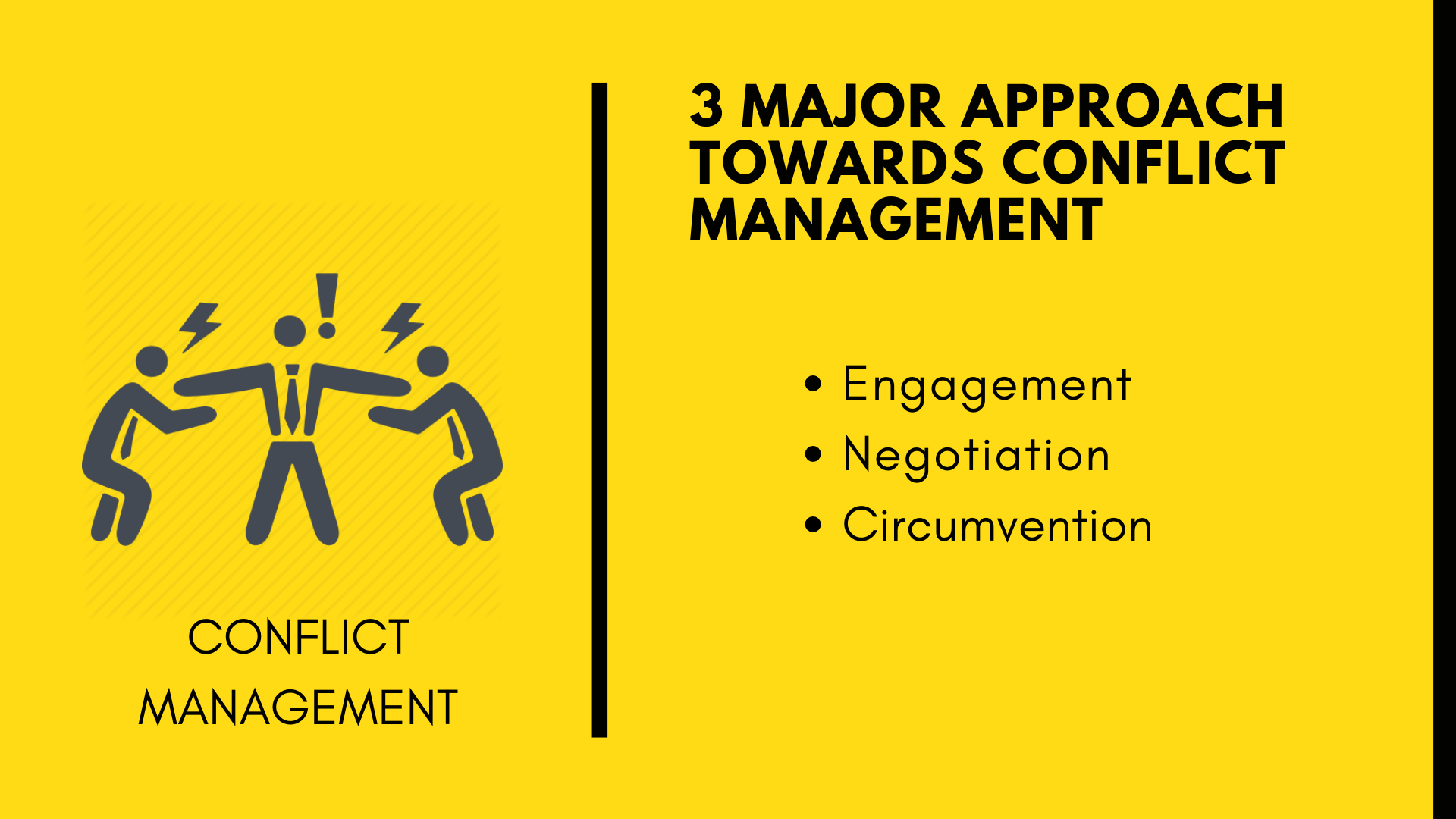
3 Major Approaches toward Conflict Management
Conflicts, a major issue plaguing the corporate houses very often. It is usually mistaken with arguments, blame games & personal remarks, hence a wrong understanding of conflict makes it even more dangerous situation to handle. Conflict is not a situation of imposing your views on others but simply a condition of inability to reach consensus over any issue among people in the organisation , and therefore it is very important to clearly understand what conflict actually means.
3/5/2026 . 5 Min Read
"A serious disagreement or agreement, typically a protracted one"
Conflicts, a major issue plaguing the corporate houses very often. It is usually mistaken with arguments, blame games & personal remarks, hence a wrong understanding of conflict makes it even more dangerous situation to handle. Conflict is not a situation of imposing your views on others but simply a condition of inability to reach consensus over any issue among people in the organisation , and therefore it is very important to clearly understand what conflict actually means.
Every Organisation has different approach towards handling conflicts. A few different approaches to handle conflicts are viz. engaging conflicts proactively, a compromising solution and one that is avoiding.Each method has got its pros and cons and may be suitable some specific solution. Research shows that large number of people are assertive towards handling disagreements at their work place. Many just want to avoid dissensions which might lead to incomplete tasks or delay in execution of any action. Yet few employees take a step forward unleashing their inner leadership skills and dissolving conflicts into meaningful solutions.
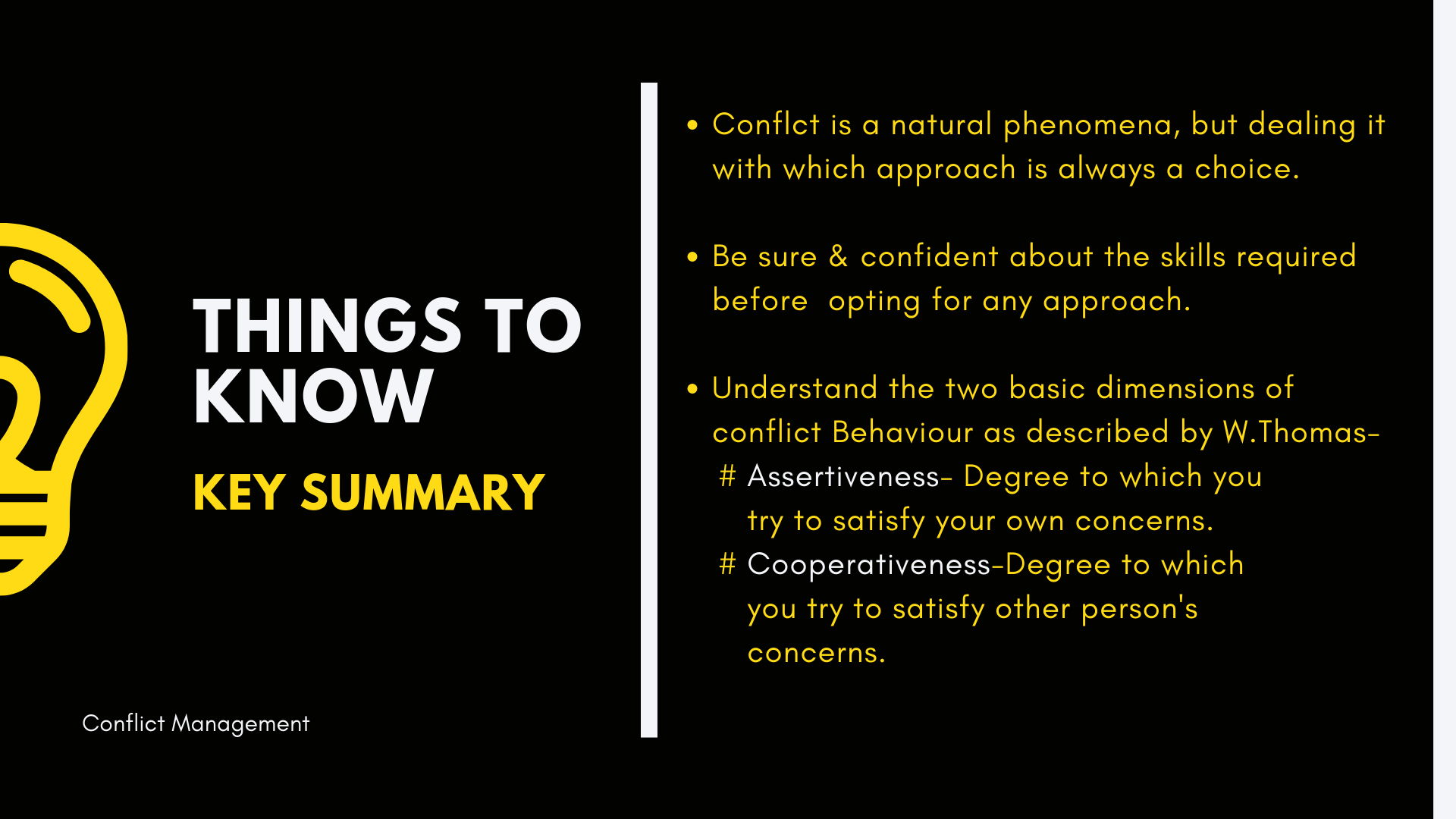
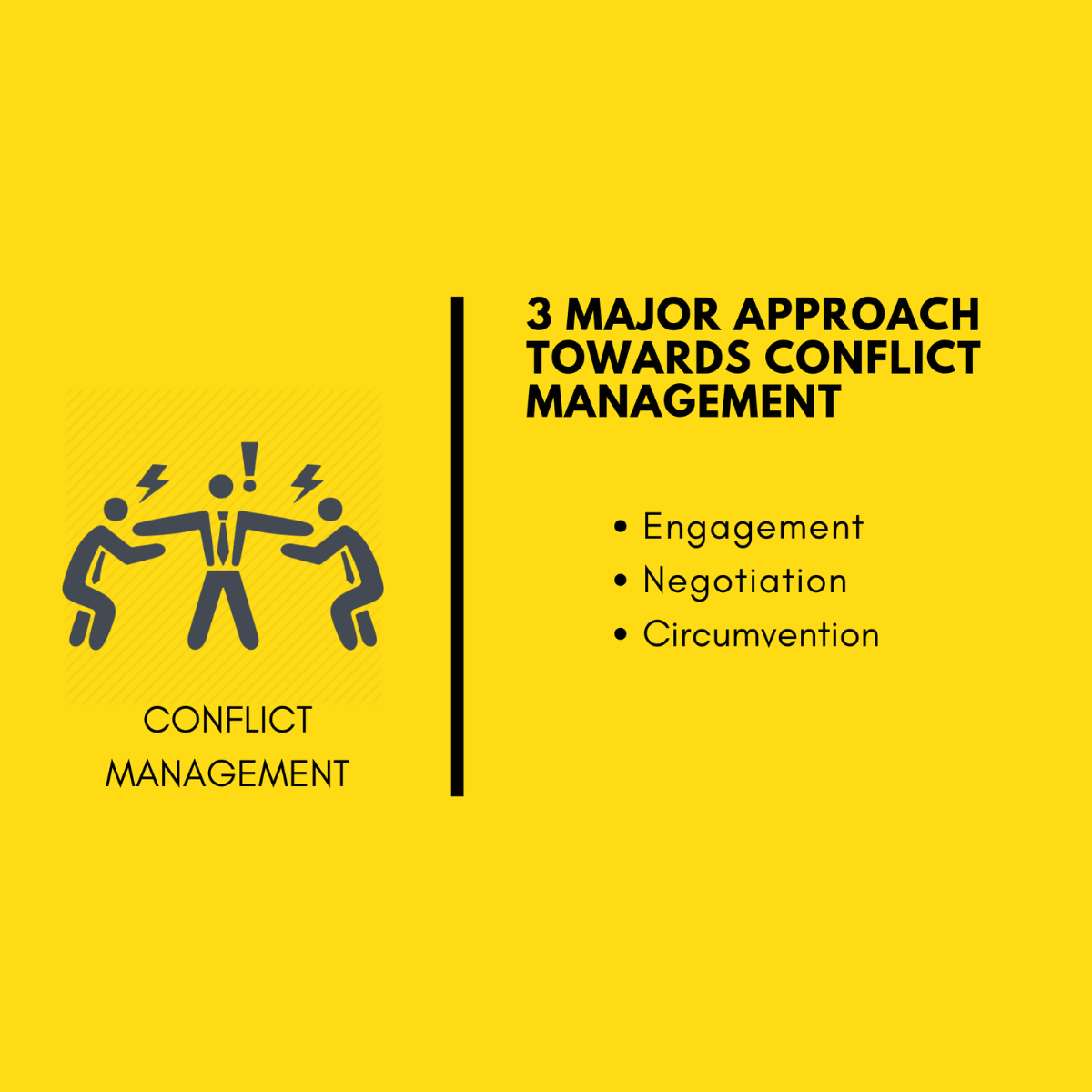
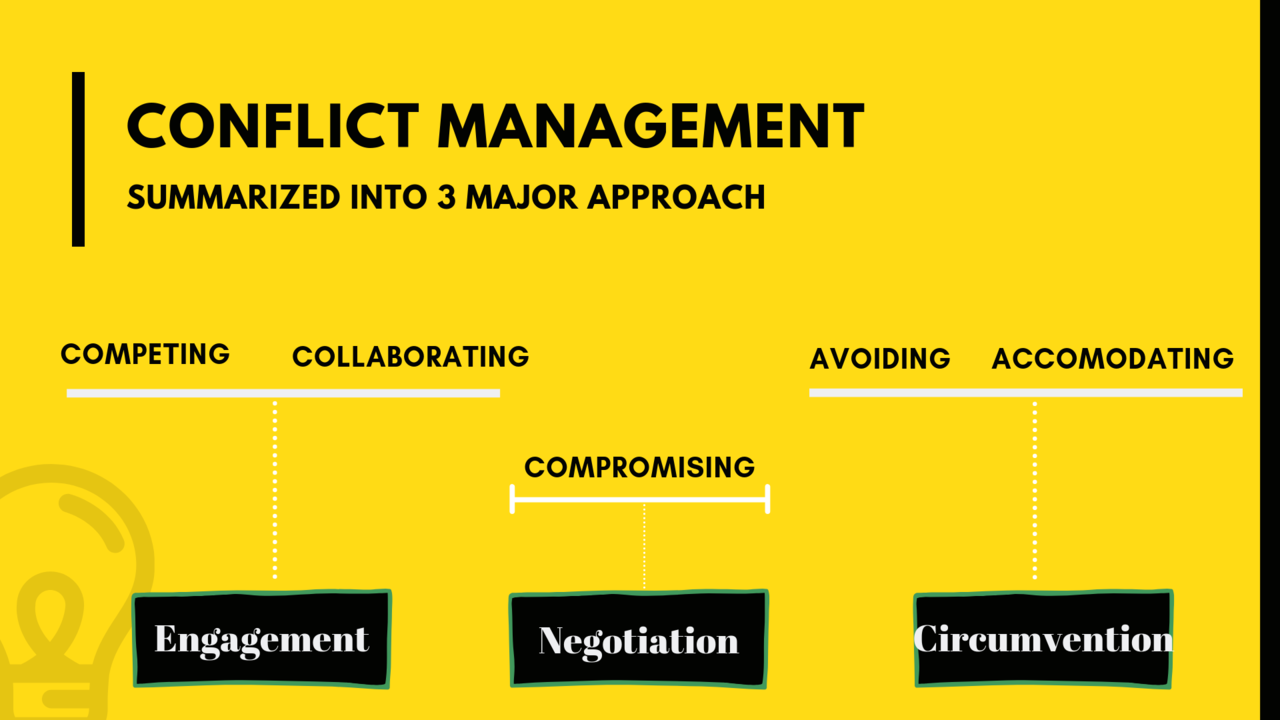
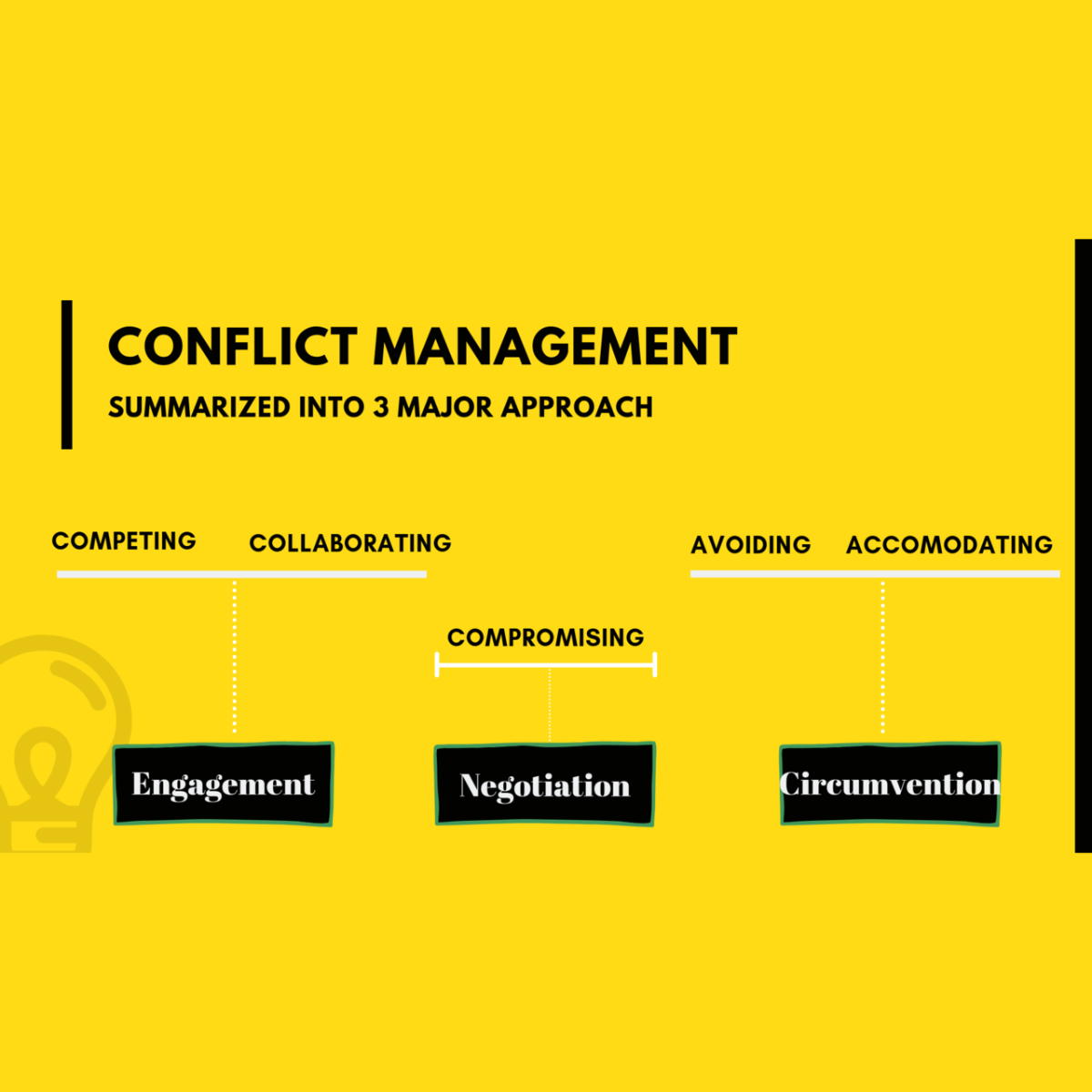
Though, according to Thomas & Kilmann, creators of TKI assessment, a conflict management tool, there are 5 strategies to resolve conflicts: Competing, Collaborating, Compromising, Avoiding & Accommodating. These 5 however can be summarized into 3 major approach while handling any disagreement.Let's understand how.
Engagement
Negotiation
Circumvention
3/5/2026 . Arzoo Choudhary
ENGAGEMENT
Engagement can be an approach taken for a Competing & Collaborating strategy. Taking an initiative in solving a conflict is a skill that needs to be mastered and is rarely found at the manager level, but people at higher levels possess prowess and usually end up with a quick fix.
It becomes important to engage the stakeholders in the conflict so as to understand the root cause of the problems so that they don't turn into big issues unnecessarily. Working in partnership & getting heads together can boost your ideas. Engagement is feasible when employees are honest & aboveboard and are open to new information. It can be practised when the participants have sufficient time to express their views on a particular issue. After all engagements have to be sufficiently long and effective so as not to get caught in a time warp.
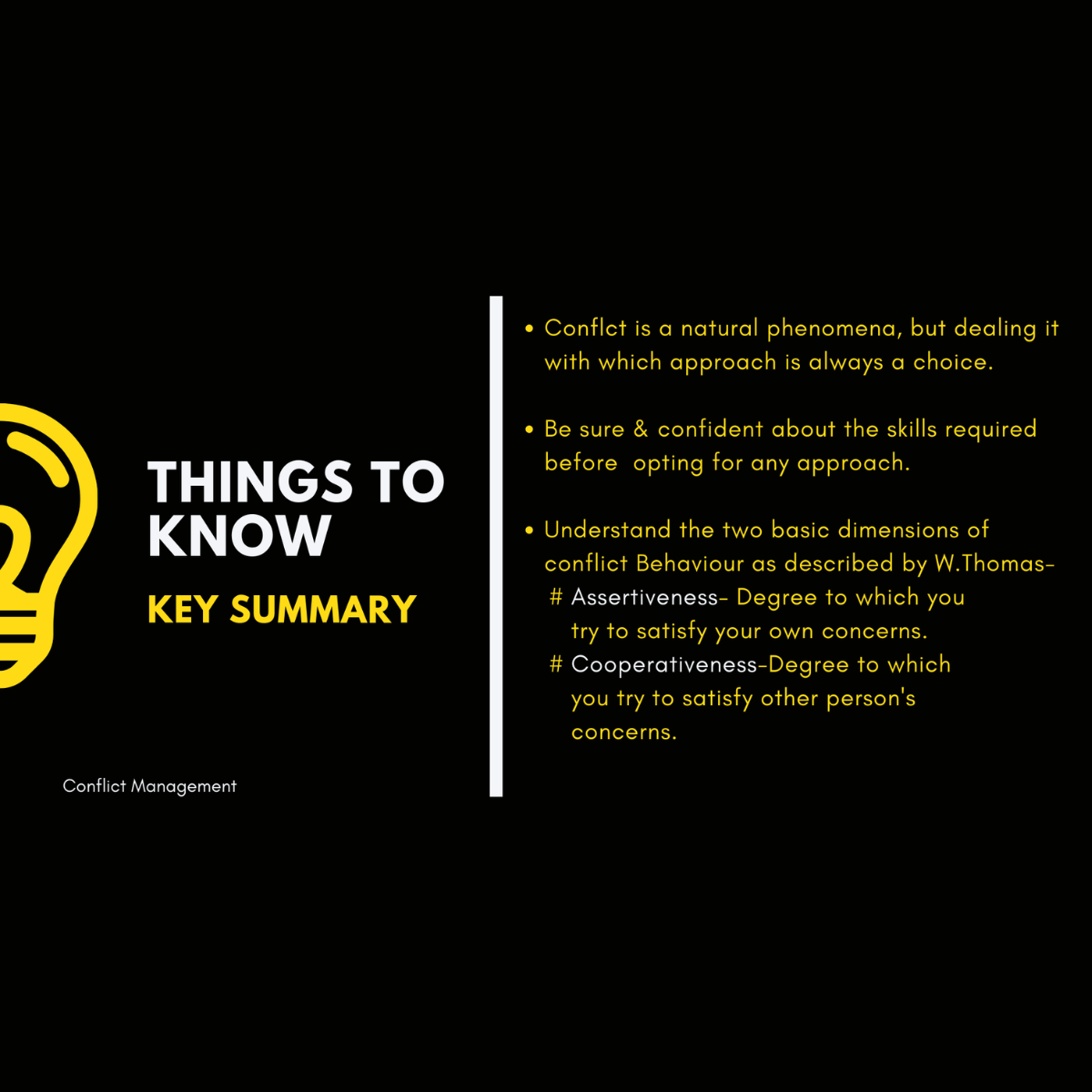
Essential skills are required for an engagement, because in this approach, you are not only phrasing your view but also giving chance for others to present theirs i.e
In many case you have to be patient enough & not jump to conclusions.
A right tone can build a strong relationship with your partners, helping everyone to take the disagreement as a mutual problem.
Giving equal importance to both the parties' concerns and brainstorming on the solutions that satisfies everyone
Being rationally firm on your view points whenever needed but proposing solutions that can resolve everyone's concerns.
NEGOTIATION
Negotiation falls under the strategy of compromising and it depicts both assertiveness & cooperativeness aspect of a person. It does not always bring full satisfaction and leave you in a losing situation. Negotiation can happen in the form of bargaining or compromising on certain views or situations. Therefore one should always try to negotiate when the concern is not detrimental to you. It's good to negotiate/compromise when you don't have enough to loose and both parties will be happy at the end of the day. Unlike engagement, negotiation should be practiced when you don't have enough time to think & devise a strategy to handle the concern. In cases where engagements fail to conclude an issue and the situation calls for a negotiation from all the parties involved, leaving them with solutions less satisfying but best possible in those scenarios.
Essential skills required for Negotiation can be:
Maintaining the bond with everyone. because a wrong bargaining or compromise can lead to a crack in the glass, which may become impossible to mend
Realizing the worth of your concern or situation is important because if you know it accurately, you definitely won't fall for anything less than the right worth.
Avoiding bias is critically important and being honest with all the aspects is key. Everyone should be a happy stakeholder in the end.
CIRCUMVENTION
Circumvention is an approach of avoiding & accommodating strategy. Conflicts are not always addressed or if addresses are not handled with a very clever approach. The main reason for this is either irrational stakeholders or insignificant issues, which can be futile or sometimes dangerous to handle. It also happens while favoring someone or respecting the delegation of certain authority. One should be smart enough to choose circumvention approach as under this one might have to lose more than the other.
Essential skills that are required for Circumvention should be gained to deal with revoke, outvote of your views
Sacrificing your own good for other's needs.
Delegating first mover advantage to other so that they can test their wings.
Identifying the level of information other stakeholders have can help you take a decision when to avoid a conflicting situation.