
Three conflict management approaches for healthier workplaces.
Conflict is not a blame game. It is the inability to reach consensus over an issue, and it needs a clearer response than avoidance, argument or personal remarks.


On this page
What conflict really means
Conflict is often treated as a blame game, but that is not where useful resolution begins. Conflict is the inability to reach consensus over an issue among people who still need to work together.
In workplace culture, disagreement becomes expensive when people confuse the issue with the person. The goal is not to impose one view on another. The goal is to understand what is blocking alignment and choose a response that fits the situation.
As the original article explains, conflict is a natural phenomenon. Dealing with it in the right way is always a choice.
The five classic conflict strategies
The Thomas-Kilmann Conflict Mode Instrument describes five ways people respond to conflict: competing, collaborating, compromising, avoiding and accommodating.
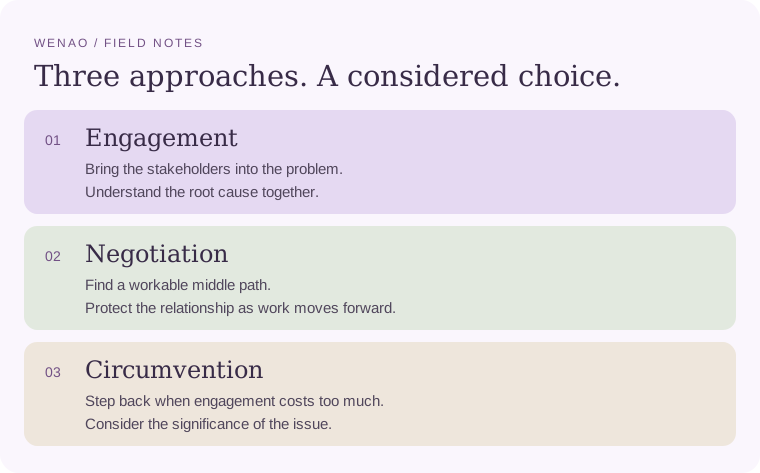
For a practical workplace lens, WENAO summarizes these into three major approaches: engagement, negotiation and circumvention. Each approach requires a different level of openness, urgency and emotional maturity.
Engagement
Engagement brings the stakeholders into the problem instead of letting the issue live in separate rooms. It is useful when people are willing to communicate openly and honestly.
The work begins with root cause analysis. What is the real issue? What information is missing? What belief, constraint or decision has created the disagreement?
Engagement also requires partnership. The other person should feel that their concerns have been heard, even when you disagree with their conclusion. Open information sharing makes the conversation less defensive and more constructive.
Skills required for engagement
The strongest engagement requires patience, a balanced tone, equal importance for both sides and the ability to stay rationally firm.
It also requires honesty about your own interest in the conflict. If you enter the conversation only to win, engagement becomes a performance. If you enter to understand and solve, it becomes progress.
Negotiation
Negotiation belongs to the space of compromise. It is useful when the concern is not deeply detrimental to either party, when there is not enough time for full engagement, or when engagement has failed to create a solution.
Negotiation should protect the bond between people while moving the work forward. That means knowing the worth of your concern, avoiding bias and choosing the best possible middle path.
Circumvention
Circumvention includes avoiding or accommodating when the issue is insignificant, the stakeholder is irrational, or the cost of engagement is higher than the value of the outcome.
This is not the same as weakness. Sometimes stepping back, delegating the first move or allowing another stakeholder to test the path is the wiser strategic response.
The practical takeaway
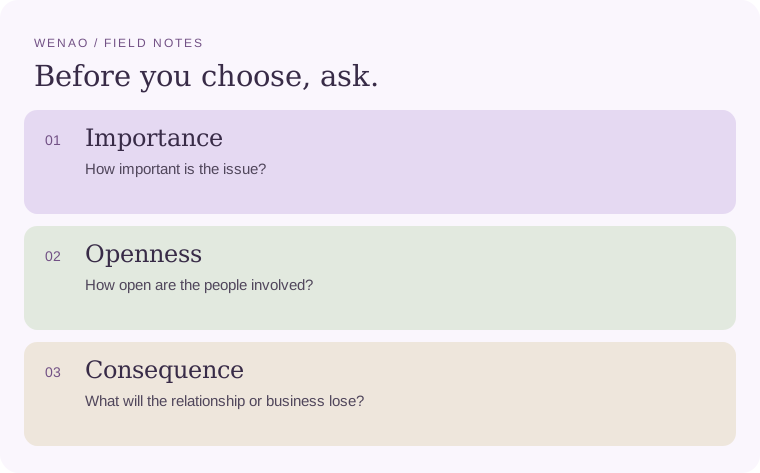
Before choosing a response, ask three questions: how important is the issue, how open are the people involved, and what will the relationship or business lose if this continues?
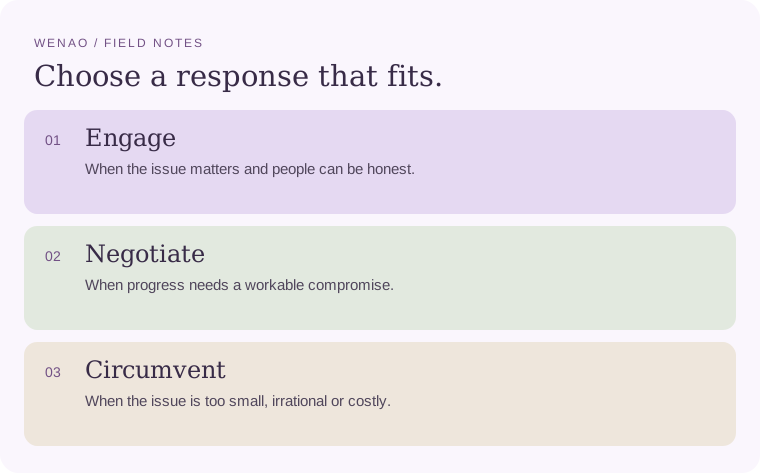
Engage when the issue matters and people can be honest. Negotiate when progress needs a workable middle path. Circumvent when the conflict is too small, too irrational or too costly to carry.
Arzoo Choudhary
Founder of WENAO. Writing on work, learning and the human side of growth.
Meet the person behind the practiceA different perspective.



More thinking. A considered next step.